Research
Publications
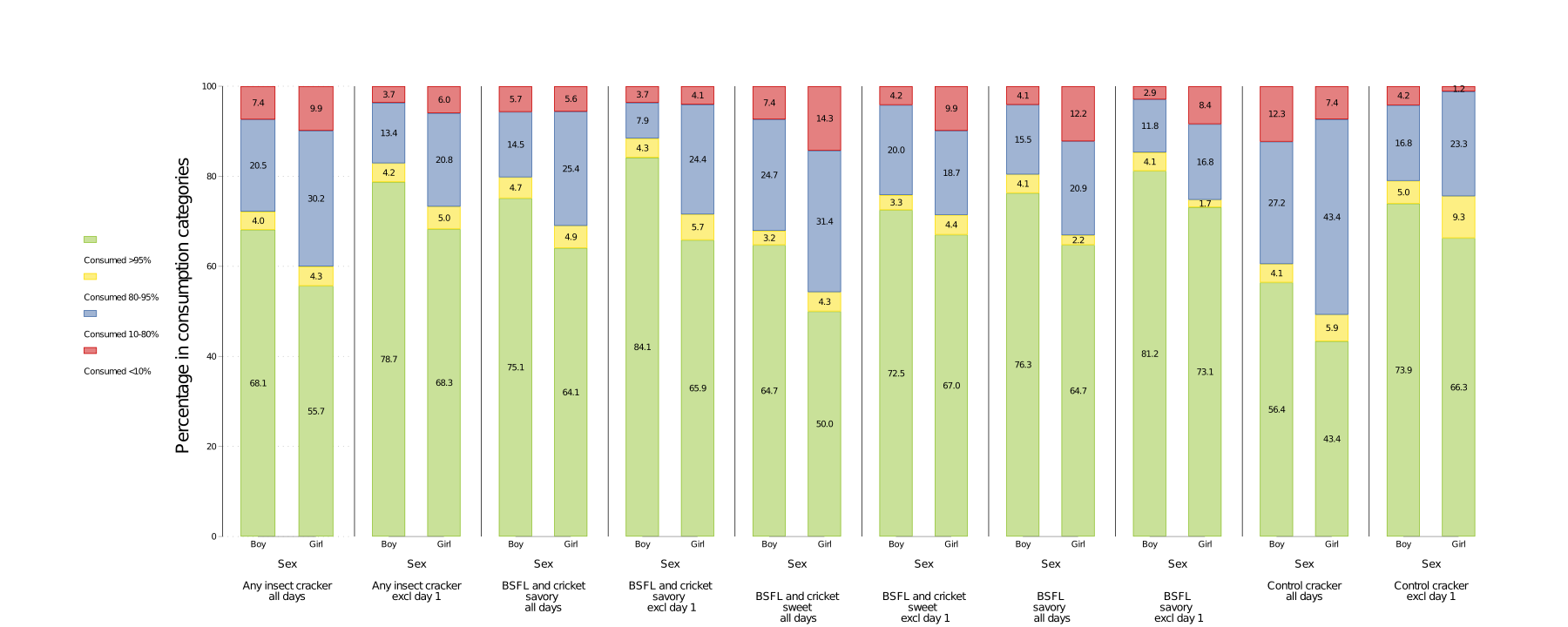
Parker, M. E., Stull, V. J., Agme, C., Runfeldt, E. N., Upton, J. B., & Hoddinott, J. (2026). “Black soldier fly larvae and cricket fortified crackers are a safe, nutritious, and acceptable snack for school children in Madagascar.” Scientific Reports.
Abstract
Edible insects are a nutrient-dense and environmentally friendly alternative to conventional animal-sourced protein. Wild-harvested insects have contributed to diets throughout history, but questions remain regarding the desirability of insect-fortified foods produced by expanding insect farming. We evaluated the safety, nutrition, and acceptability of three locally sourced and produced insect-fortified snacks among primary schoolchildren in Madagascar. Laboratory analyses confirmed the crackers containing crickets and/or black soldier fly larvae were safe for children ages 9 to 13 across all microbiological parameters and heavy metal contaminants, and nutritious, providing significant protein (12.2–14.2 g/100 g), iron (6.6-8.6 mg/100 g), and zinc (3.0-3.4 mg/100 g). Child acceptance (N = 187) was high, with approximately 80% consuming at least 80% of their portions, and 89% selecting insect-fortified crackers over the control when given a choice. Savory recipes were preferred over sweet. In focus groups, caregivers (N = 60) reported positive perceptions of the snacks, with anecdotal improvements in child satiety, energy, and sleep.
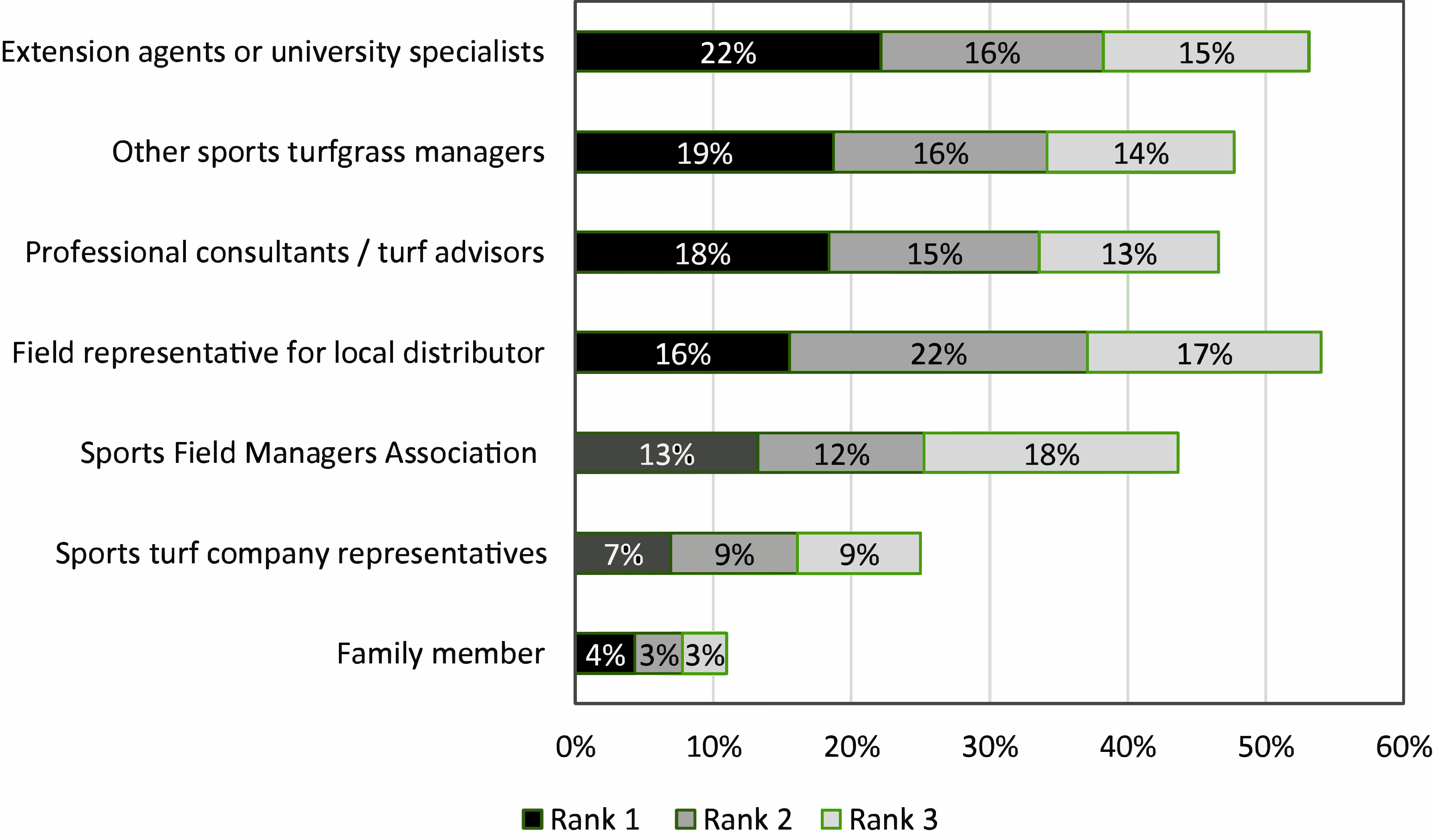
Frisvold, G. B., Agme, C., Ervin, D., et al. (2023). “Extension event attendance increases adoption of weed management practices by sports field managers.” Weed Technology, 37(5), 578–587.
Abstract
Data from a national survey of 348 U.S. sports field managers were used to examine the effects of participation in Cooperative Extension events on the adoption of turfgrass weed management practices. Of the respondents, 94% had attended at least one event in the previous 3 yr. Of this 94%, 97% reported adopting at least one practice as a result of knowledge gained at an Extension turfgrass event. Half of the respondents had adopted four or more practices; a third adopted five or more practices. Nonchemical, cultural practices were the most-adopted practices (65% of respondents). Multiple regression analysis was used to examine factors explaining practice adoption and Extension event attendance. Compared to attending one event, attending three events increased total adoption by an average of one practice. Attending four or more events increased total adoption by two practices. Attending four or more events (compared to one event) increased the odds of adopting six individual practices by 3- to 6-fold, depending on the practice. This suggests that practice adoption could be enhanced by encouraging repeat attendance among past Extension event attendees. Manager experience was a statistically significant predictor of the number of Extension events attended but a poor direct predictor of practice adoption. Experience does not appear to increase adoption directly, but indirectly, via its impact on Extension event attendance. In addition to questions about weed management generally, the survey asked questions specifically about annual bluegrass management. Respondents were asked to rank seven sources of information for their helpfulness in managing annual bluegrass. There was no single dominant information source, but Extension was ranked more than any other source as the most helpful (by 22% of the respondents) and was ranked among the top three by 53%, closely behind field representative/local distributor sources at 54%.
Working papers
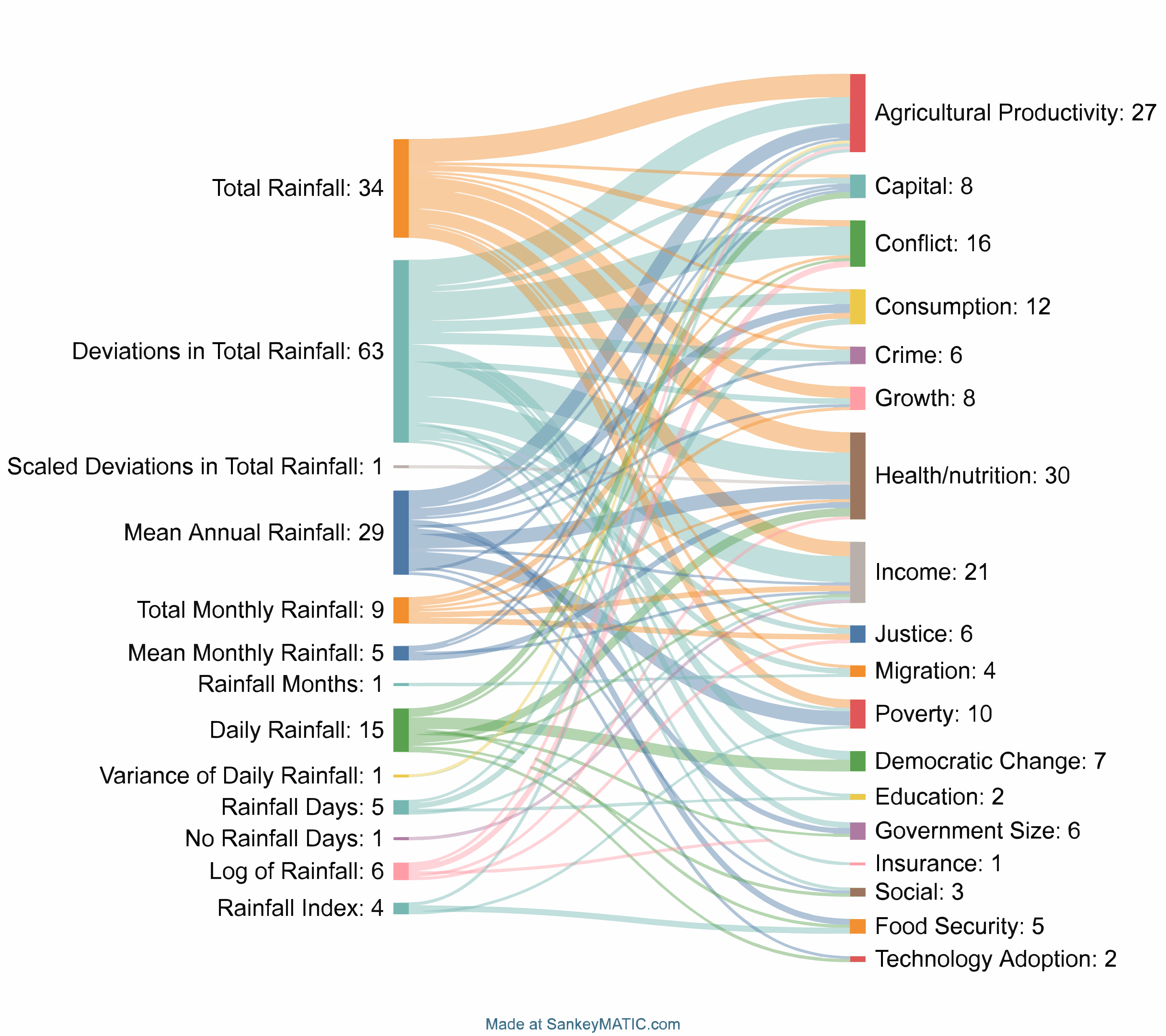
Michler, J., Josephson, A., Agme, C., & Kilic, T. (2026). “Cloudy with a chance of significance: Specification search and the illusion of exogeneity in remotely sensed weather data.”
Draft in progress, available upon request. The MS thesis version is linked here.
Abstract (MS Thesis)
The rise in the availability of remotely sensed weather data has resulted in economists predicting different outcomes using rainfall as an explanatory or instrumental variable (IV). We analyze 174 papers to identify common rainfall metrics used as an instrument and show the extent of their ad hoc use in predicting a range of outcomes. We use agricultural productivity as a case study to examine the suitability of using different rainfall metrics as an IV. To that extent, we test the predictive power of the 14 most common rainfall metrics in the economics literature, calculated through six remote sensing products across six countries, on agricultural productivity. We find a large amount of heterogeneity in the performance of rainfall metrics. We also find concerning evidence about the validity of using rainfall metrics as an instrument, especially regarding possible exclusion restriction violations and weak instrument problems. Our findings emphasize the need for researchers to carefully select and justify their use of a particular rainfall metric to improve the reliability of their analysis.
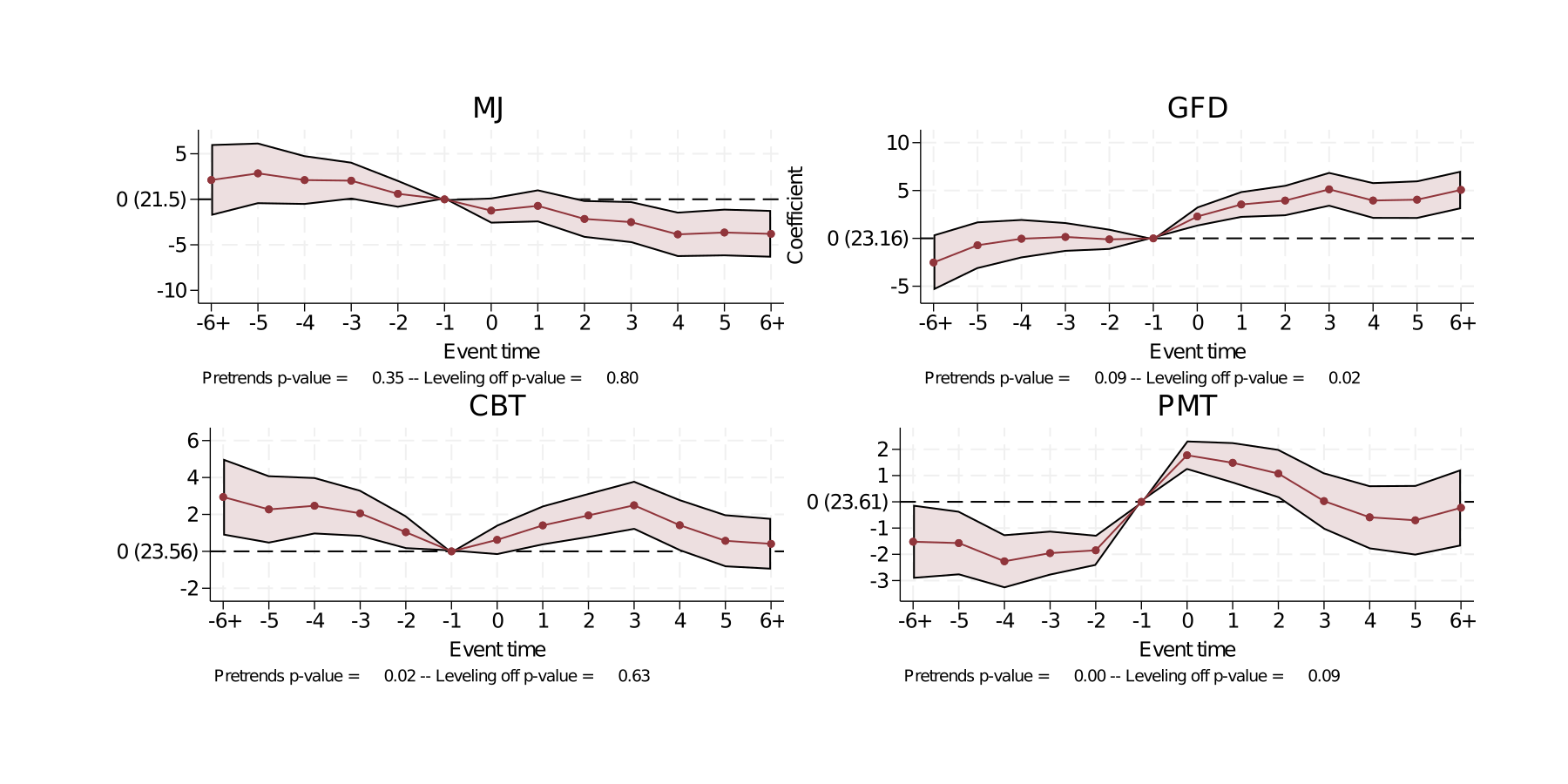
Upton, J., Schreiber, K., Agme, C., Ravaka, A., & Norton, B. (2025). “Comparing community-based and data-driven targeting approaches for humanitarian assistance: Evidence from southern Madagascar.” DEEP Working Paper 36, Data and Evidence to End Extreme Poverty, Oxford.
Abstract
Food assistance transfers in cash and in kind are a critical part of the response to food insecurity; and resources are always meagre in comparison to the need, making targeting recipients critically important. Aid agencies most commonly rely on one of (or a combination of) three major approaches to targeting: categorical methods, which target households based on a rule assigned to available indicators; proxy means testing (PMT), which builds a simple model to predict the worst off; and/or community-based targeting (CBT), which allows community leaders to make rules or choose households directly. A great deal of research has gone into evaluating targeting accuracy and effectiveness, but this research is often limited in scope and depth, due to insufficient or unsuitable data. We use representative monthly panel data collected over two years from 1,800 households in Madagascar’s Great South, paired with administrative data on targeting and assistance received, to investigate two core questions. First, how different are the households identified through different targeting methods, in terms of who is targeted and their characteristics and/or needs? Second, which group improves more, and for longer, following the receipt of assistance? We compare CBT-targeted households both to categorical targeting as practised in the study area and a simulated PMT approach. We find that the groups differ dramatically depending on how they were targeted. CBT-targeted groups have on average better food security status. On the other hand, the PMT method tends to select the worst-off households, and in this respect is closer to the categorical approaches. However, panel methods reveal that CBT households are on average trending worse prior to receiving assistance, and their food security status improves more after receiving assistance. This suggests that communities identify those who, while not worst off, are being negatively affected by adverse food security conditions, reflecting an understanding of the dynamic reality on the ground that cannot be captured by data alone. The results have several policy implications, including the potential tension between targeting the worst off and targeting to achieve a measurable impact.
Works in progress
Agme, C., Hoddinott, J., & Upton, J. “Trapped: Seasonality, recovery, and persistence in high-frequency food security data.” Working Paper (forthcoming).
Abstract
Annual surveys are insufficient to distinguish the nature of food insecurity between the lean and harvest seasons. We use high-frequency food security data from a representative sample to understand seasonal and chronic food insecurity. We also assess the shape of the hunger season, the inter- and intra-household components, the movement through the food insecurity thresholds, and evaluate whether households are caught in a food insecurity trap. Finally, we test the robustness of these findings using the four food security indicators namely FCS, rCSI, HHS, and HDDS.
Upton, J., & Agme, C. “Cash, climate, and coping: An analysis of a natural experiment in Malawi.” Working Paper (forthcoming).
Abstract
We study the effects of unconditional cash transfers on food insecurity using a real lump-sum program in two districts of Malawi, drawing on five years of high-frequency food security panel data. Treatment is measured using the lump-sum ledger against three control groups: villages considered but never aided; villages never considered but geographically closer and present in the two-district sample; and villages similar to the treatment via PMT. Thus, we examine the sensitivity of the estimates in relation to these various comparison groups.
Parker, M., Stull, V., Runfeldt, E., Agme, C., Upton, J., & Hoddinott, J. “Assessing the impact of insect-fortified foods on child health, nutrition, and environmental sustainability: A prospective, cluster-randomized controlled trial.” Working Paper (forthcoming).
Abstract
We assess whether the insect-fortified crackers can improve the health status of Malagasy school children. The objectives are to: (1) Assess changes in gut microbiome composition that occur after 6 and 14 weeks of cracker consumption through 16S rRNA sequencing. (2) Assess changes in intestinal and systemic inflammation after 6 and 14 weeks of cracker consumption through quantification of fecal calprotectin, lactoferrin, myeloperoxidase (MPO), and alpha-1-antitrypsin (AAT) and circulating pro-inflammatory cytokines. (3) Assess changes in iron status after 14 weeks of cracker consumption through quantification of hemoglobin (Hb), inflammation-adjusted serum ferritin, and soluble transferrin receptor (sTfR).
Data
I strive for transparent and reproducible social science research. Below are the data and code to reproduce published and working papers. Please let me know if a link is broken or something is not working as expected. I would rather hear about it than not.
Parker, M. E., & Agme, C. (2025). “Acceptability of insect-fortified snacks among school children in Madagascar.” figshare.
Description
Edible insects have been an important part of the human diet throughout history. They represent a low-cost, climate friendly, and culturally acceptable food in Madagascar, with nutritional profiles akin to meat. Insects contain valuable bioavailable protein, iron, zinc, and fiber. In this acceptability study, we determined that three different recipes of our insect-fortified snack crackers are safe, nutritious, and acceptable to children.
Agme, C., Josephson, A., Michler, J.D., Kilic, T., and Murray, S. (2024). “Variable Selection in Economic Applications of Remotely Sensed Weather Data: Evidence from the LSMS-ISA.”
Description
The code in this repository is primarily for replicating the cleaning of the household LSMS-ISA data. This requires downloading this repo and the household data from the World Bank website. The projectdo.do should then replicate the data cleaning process.